
VADALEX Technician Certification: Why a Credential Matters More Than a Receipt
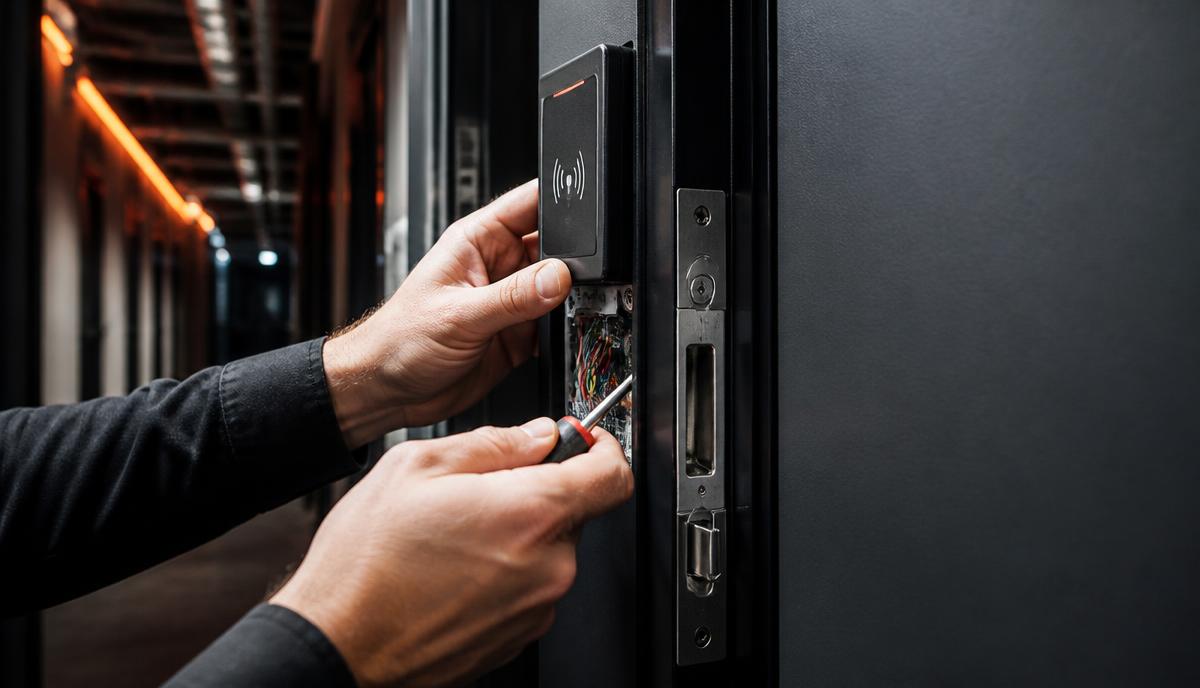
A receipt proves a technician showed up. It does not prove the work was done right. VADALEX Technologies runs a structured certification program because, in security and life-safety systems, the difference between a correct install and a near-miss is measured in seconds and in liability.
Why certification exists
Access control, fire alarm, video surveillance and audio systems all look straightforward once they are running. The hard part is everything before that: power calculations, grounding, network segmentation, door hardware compatibility, fail-safe versus fail-secure behavior, and the dozen small decisions that determine whether a system survives its first power outage. Certification makes those decisions visible and verifiable.
What the track covers
Our flagship program — the VADALEX Access Control Technician Certification — is built around what a technician actually encounters on site, not a generic syllabus.
Wiring and power. Voltage drop over long cable runs, shared power supplies, battery sizing for fail-safe operation, and proper grounding to avoid ground loops and reader interference.
Readers and credentials. Card, fob, mobile and biometric readers; how to choose the right technology for the door, the environment and the threat model.
Door hardware. Electric strikes, maglocks, request-to-exit devices, door position sensors, and the fire-code rules that override convenience.
Networking. Controller addressing, subnet planning, offline resilience, and keeping the access network off the corporate LAN where it does not belong.
Software configuration. User provisioning, access levels, schedules, holiday calendars, anti-passback, and first-card-open logic.
Troubleshooting. A structured diagnostic method: isolate the layer (power, hardware, network, software) before swapping parts. Most field problems are solved at the wrong layer first.
How assessment works
Certification is not a attendance certificate. Candidates pass a theory exam and then a practical assessment on a live, deliberately misconfigured rig — find the faults, fix them, and leave the system in a known-good state. A technician who cannot make a door behave correctly under simulated failure does not pass.
Who it is for
Installers and service technicians who want their work to carry a verifiable credential, integrators who need a baseline standard across multiple crews, and building managers who want a defensible answer when an auditor asks who signed off on the installation.
What a certified technician brings to a project
Faster commissioning, because the diagnostic method is shared across the team. Fewer return visits, because the install was done to a standard the first time. And, when something does fail, a clear audit trail of who did what and when — which is what insurance carriers and fire marshals actually want to see.
Learn more
The Access Control Technician Certification is the first track live, with fire, video and audio specializations in development. See the Certification page for the current program and assessment schedule.